
A consent banner records that you asked the question; it does not prove you honoured the answer — and enforcement turns on the answer. Consent is a runtime property of your site: it changes with every deploy, tag, and vendor update, so it cannot be governed by a one-time consent management platform configuration. The control that actually fits the problem is behavioural: load the site, exercise each choice, and observe what really fires, per jurisdiction. That produces evidence, which a screenshot of a banner does not.
Almost every company we talk to has a consent banner. Far fewer can answer the only question that matters when a regulator comes knocking: when a visitor clicks "Reject," does your site actually stop tracking them? The banner proves you asked. It says nothing about whether you honored the answer — and that gap is where the fines live.
Consent has quietly become one of the most enforced areas of privacy law, and one of the easiest to get wrong without ever noticing. This is our view on why a Consent Management Platform (CMP) is necessary but not sufficient, and why consent compliance has to be treated as something you monitor continuously rather than configure once.
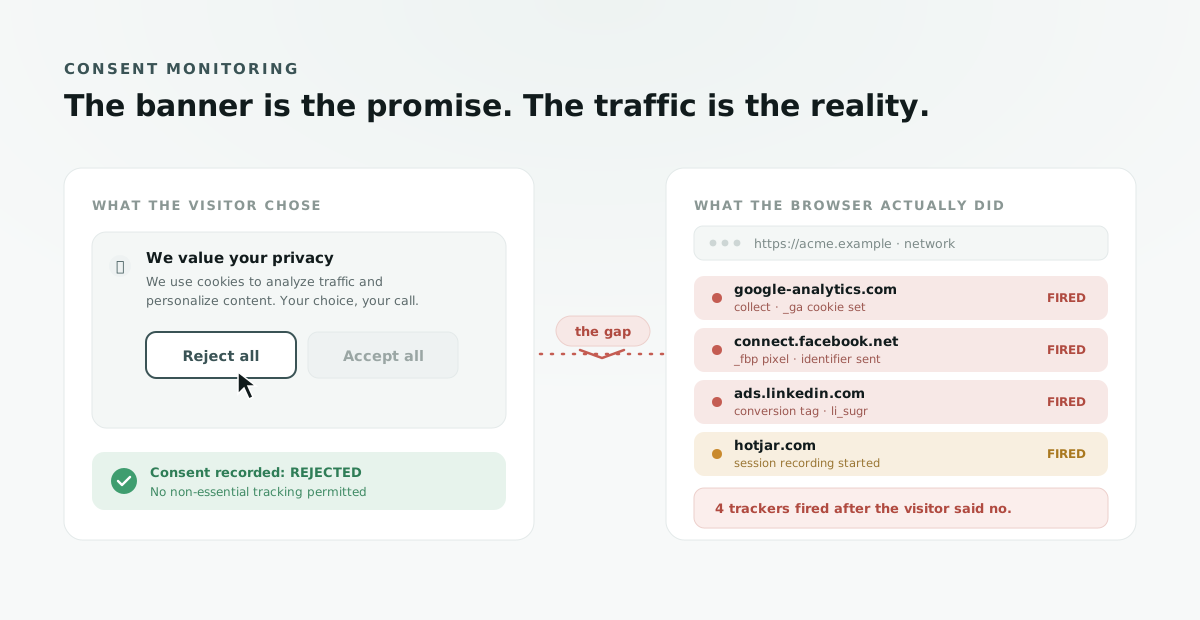
Consent is a runtime property, not a document
Most privacy programs treat consent as a project: pick a CMP, design the banner, map the categories, ship it, move on. That framing is the root of the problem. Consent is not a static artifact like a policy PDF. It is a runtime behavior — a promise your website and apps must keep on every page load, for every visitor, in every jurisdiction, after every deploy.
A modern website is a moving target. A marketing team adds a new analytics pixel through a tag manager. An A/B testing SDK ships in the next release. A vendor silently updates their script to set an extra cookie. None of these touch your banner, your privacy policy, or your data map. All of them can break consent. The document that describes how you handle consent is still perfectly accurate. The behavior it describes is no longer true.
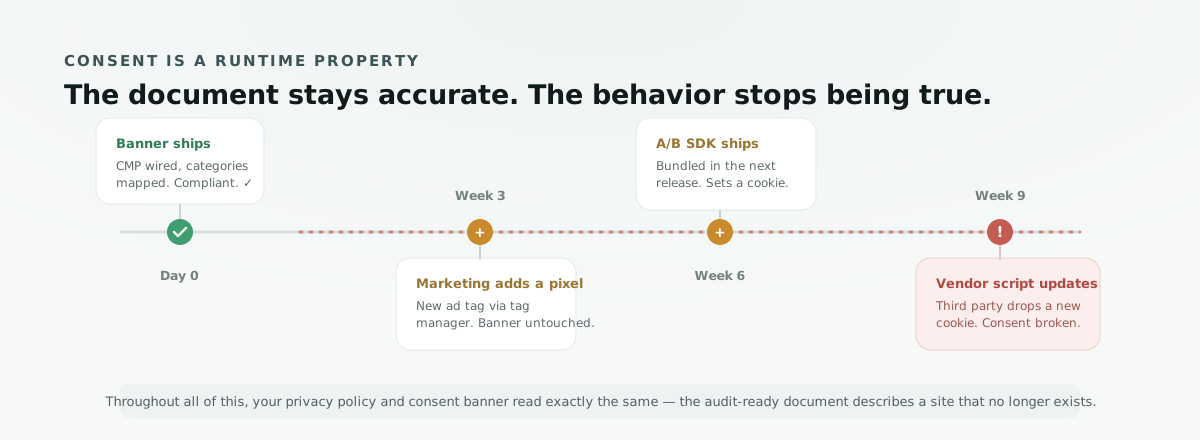
This is the same drift we see across privacy programs generally: software changes faster than the documents written about it. With consent, the drift is uniquely dangerous because the evidence of a violation is generated automatically, in public, on every visit — in the network requests leaving the browser of anyone who said no.
Why a CMP doesn't make you compliant
A CMP is a genuinely useful tool. It collects the choice, stores the consent record, and broadcasts signals other scripts are supposed to respect. But a CMP governs the front door. It cannot guarantee what every script, pixel, and SDK behind that door actually does with the answer.
Consent breaks in mundane, well-documented ways:
- Tags that fire before consent. Analytics and advertising tags load on page render rather than waiting for a choice, setting cookies and sending identifiers before the visitor has clicked anything.
- Tags that ignore rejection. A script is configured to respect consent in theory but fires regardless, because a tag manager rule was never wired to the CMP signal.
- Vendor scripts that go rogue. A third party updates their code and starts dropping new cookies or pixels you never approved and never see.
- Potentially ignored browser signals. Qualifying Global Privacy Control (GPC) and Do Not Sell/Share requests may have to be processed under applicable US state laws. A browser scan can compare observable behavior, but network counts alone cannot prove that a controller honored or ignored the request.
- Inconsistent banners. The banner is correct on the homepage and missing, misconfigured, or pre-checked on a landing page, a subdomain, or in the mobile app.
- Broken TCF strings. The IAB Transparency and Consent Framework string is malformed or contradicts what the user actually selected, so downstream ad partners receive the wrong purposes.
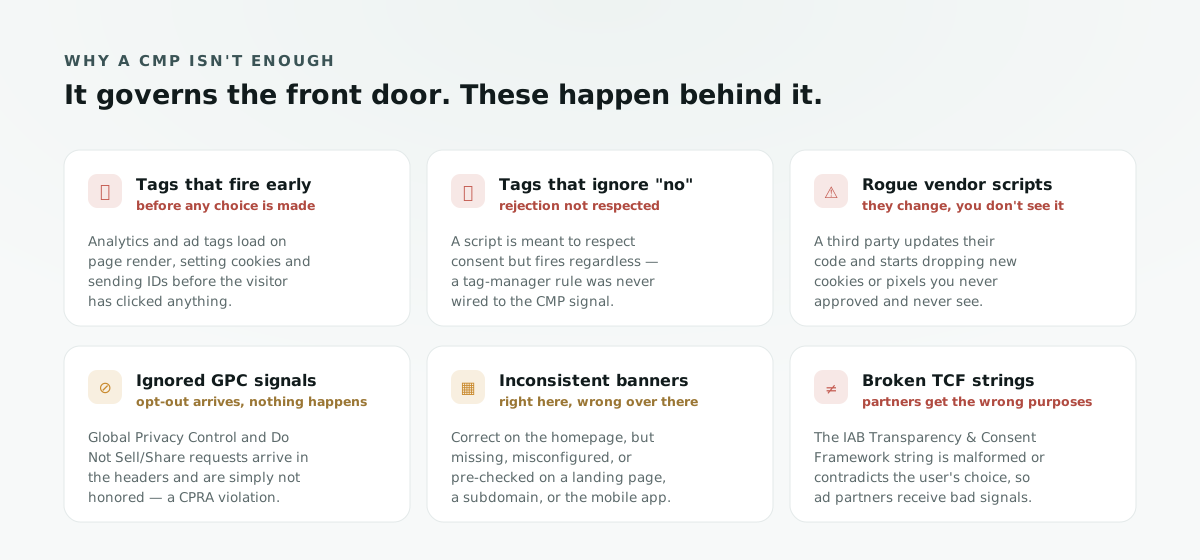
Every one of these passes a casual look. The banner is there. The consent record exists. And yet personal data is leaving the browser of someone who opted out. A CMP can't tell you this is happening, because the CMP is one of the actors being relied upon — you can't ask the thing being audited to audit itself.
What regulators are actually enforcing
This is not a hypothetical risk. Under the GDPR and the ePrivacy regime, non-essential cookies and trackers require freely given, specific, informed, and unambiguous opt-in consent before they fire — and "reject" must be as easy as "accept." European authorities have issued nine- and ten-figure penalties tied to consent and cookie practices, and the pattern is consistent: it is not the absence of a banner that gets penalized, it is the gap between what the banner promised and what the site did.
In the United States, the CPRA and the wave of state privacy laws that followed it set a different but equally concrete bar: businesses must honor opt-out preference signals like GPC, and "do not sell or share" must mean what it says. By 2026 roughly twenty US states have comprehensive privacy laws on the books. The common thread across both regimes is that consent is judged by behavior, not paperwork — which means your evidence has to be behavioral too.
Continuous consent monitoring is the missing control
If consent is a runtime property that drifts with every release, then the control that governs it has to run continuously — in the same place the violation would occur. That means loading your sites and apps the way a real visitor would, exercising the consent choices, and watching what the browser actually does in response.
Concretely, continuous consent monitoring should answer, on a schedule and after meaningful changes:
- Does a compliant consent banner appear, with a genuine reject option, on every property and every key page?
- Before any choice is made, do non-essential cookies and trackers stay silent?
- When the visitor rejects, do those cookies, pixels, and SDKs actually stop — or do they fire anyway?
- Are GPC and Do Not Sell/Share signals detected and respected?
- Is the IAB TCF consent string present, valid, and consistent with the choice the user made?
- Is the behavior correct per jurisdiction — opt-in where GDPR/ePrivacy applies, opt-out where US state law applies — rather than a single global guess?
- Where is data going in transit, and to which third parties, when consent is and isn't granted?
The output that matters is not a green checkmark. It is evidence: the specific cookies and network requests observed, a screenshot of the banner that was actually shown, the jurisdiction-specific rubric it was scored against, and a clear line from the finding to the change that needs to be made.
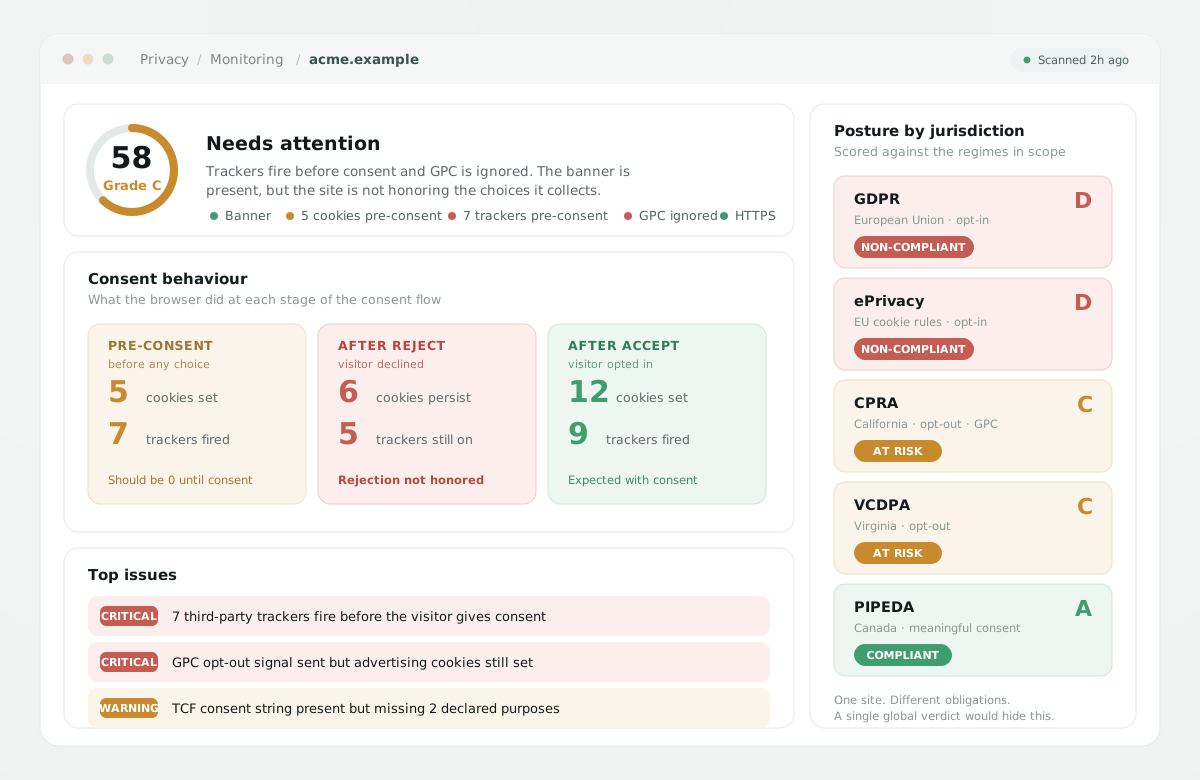
How Noru approaches it
We built consent monitoring into Noru because it is the natural extension of how we think about privacy: your real, running systems are the source of truth, and the job of a privacy platform is to keep the picture continuous rather than collecting it in a panic before an audit.
Noru's privacy monitor loads the domains you care about, exercises observable consent actions, and records what the browser does — cookies set, classified endpoints contacted, the CMP detected, the TCF string parsed, a GPC network comparison, and transport signals. It runs automated checks only for the legal regimes selected at scan time, while keeping the overall score explicitly global and technical. Applicability and legal conclusions still require facts the public page cannot prove.
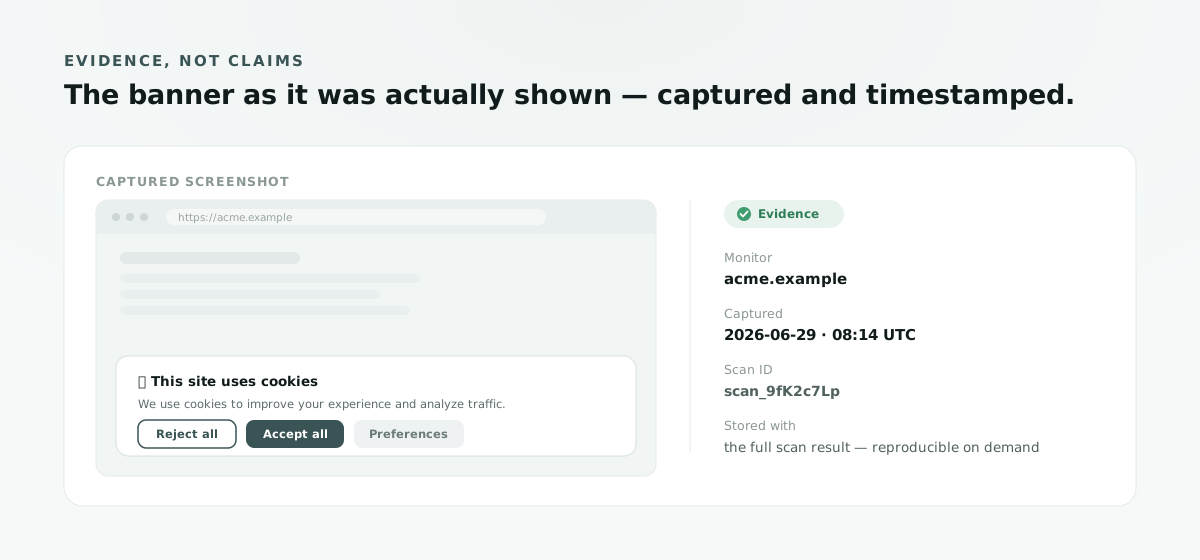
- Behavioral scans, not questionnaires. Noru observes cookies, classified network endpoints, CMP presence, TCF strings, GPC-phase network changes, and transport signals on the tested live page.
- Selected jurisdiction checks. ePrivacy is not collapsed into GDPR, and US opt-out checks are separated, but selecting a law does not prove that it legally applies to the operator or visitor.
- Reviewable evidence. Each scan persists its structured observations and, when available, a timestamped banner screenshot so a reviewer can inspect what the scanner actually saw.
- Findings connected to your program. Observed and potential issues are retained for investigation and remediation; they are not substitutes for legal review.
- Repeated by default. Scheduled scans create successive evidence snapshots, while version-aware lifecycle confirmation and alerting remain a planned monitoring layer.
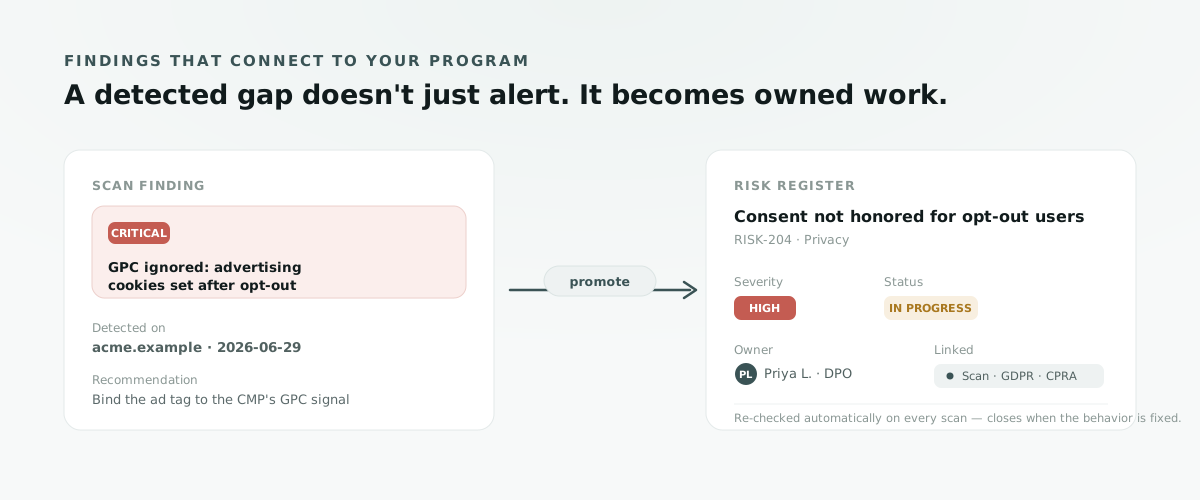
The shift: from "we have a banner" to "we can prove we honor it"
The organizations that handle consent well in the next few years won't be the ones with the most polished banner. They'll be the ones who can show, on any given day, that the answer a visitor gave is the answer their systems acted on. That is a monitoring problem, not a configuration problem — and it is exactly the kind of continuous, evidence-producing control that privacy regulation is converging on everywhere.
A banner is where consent begins. Monitoring is what makes it real. If you want to see what your own sites actually do when someone clicks "Reject," you can run a scan and explore consent monitoring against your real properties at noru.tech.